Princeton University scholar Eduardo Cadava will detail his more than two-decade engagement with the work of Fazal Sheikh, a New York-born and Kenyan-Pakistani photographer, as the School of Art’s Visiting Artists and Scholars Endowment (VASE) lecture series continues.
As part of his Tuesday, March 17, talk, “Making the Invisible Visible: Fazal Sheikh’s Photographic Journey,” Cadava also will discuss his projects in Afghanistan, India, Utah, Israel and Palestine. Cadava will suggest how his photographs are a resource for us as we think about some of the most vulnerable populations around the globe and about the most pressing and urgent issues we face today. He’ll also discuss the way in which photography as a medium can help us learn how to read historically, especially in moments of danger.

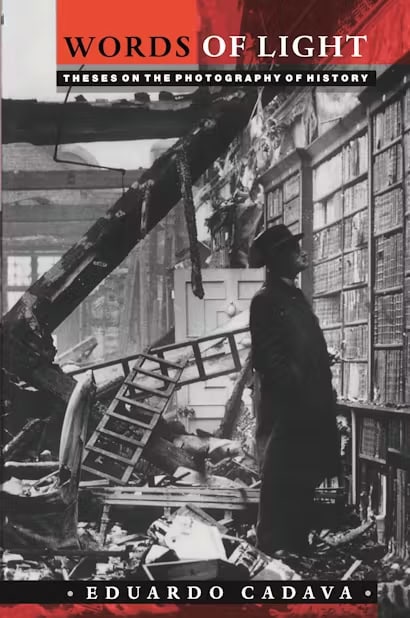
Cadava is the Philip Mayhew Professor of English at Princeton. He is the author of Words of Light: Theses on the Photography of History, Emerson and the Climates of History, Paper Graveyards, and, with Sara Nadal-Melsió, Politically Red. He has co-edited Who Comes After the Subject?, Cities Without Citizens, The Itinerant Languages of Photography, a special issue of the South Atlantic Quarterly entitled And Justice for All?: The Claims of Human Rights and, with Liana Theodoratou, has translated Nadar’s memoirs, Quand j’étais photographe, which appeared under the title When I Was a Photographer.
He has co-curated installations and exhibitions at the Slought Foundation in Philadelphia, the MAXXI Museum in Rome, Storefront for Art and Architecture in New York, the Al-Ma’mal Center for Contemporary Art in East Jerusalem, and the Princeton University Art Museum. He recently co-directed a multiyear project on the relation between political conflict and climate change with Eyal Weizman entitled Conflict Shorelines that included fieldwork in Amazonia and the Negev desert, and he collaborated with Fazal Sheikh on a project entitled Exposure that seeks to document the ruination of the Utah landscape by uranium mining and oil and gas drilling and the consequences of this ruination on native communities.
- Cadava website: english.princeton.edu/people/eduardo-cadava
- VASE website: vase.art.arizona.edu