
When you start a music degree, it can feel like there’s only one “right” outcome: performing, teaching, or doing music full‑time forever. But as many creatives sometimes learn, some careers don’t always follow a straight line, and that doesn’t mean you’ve failed, often times, it means you’re growing!
Thomas McDonald’s journey began in the University of Arizona School of Music with a clear plan; he had entered the program as a music education major, fully expecting to become a band director. Like many students, he arrived passionate, motivated, and ready to turn a love of music into a lifelong career.
A few years in, though, something shifted.
For Thomas, the turning point wasn’t a singular moment, it was a growing realization that the path of professional performance didn’t fit with the life he wanted.
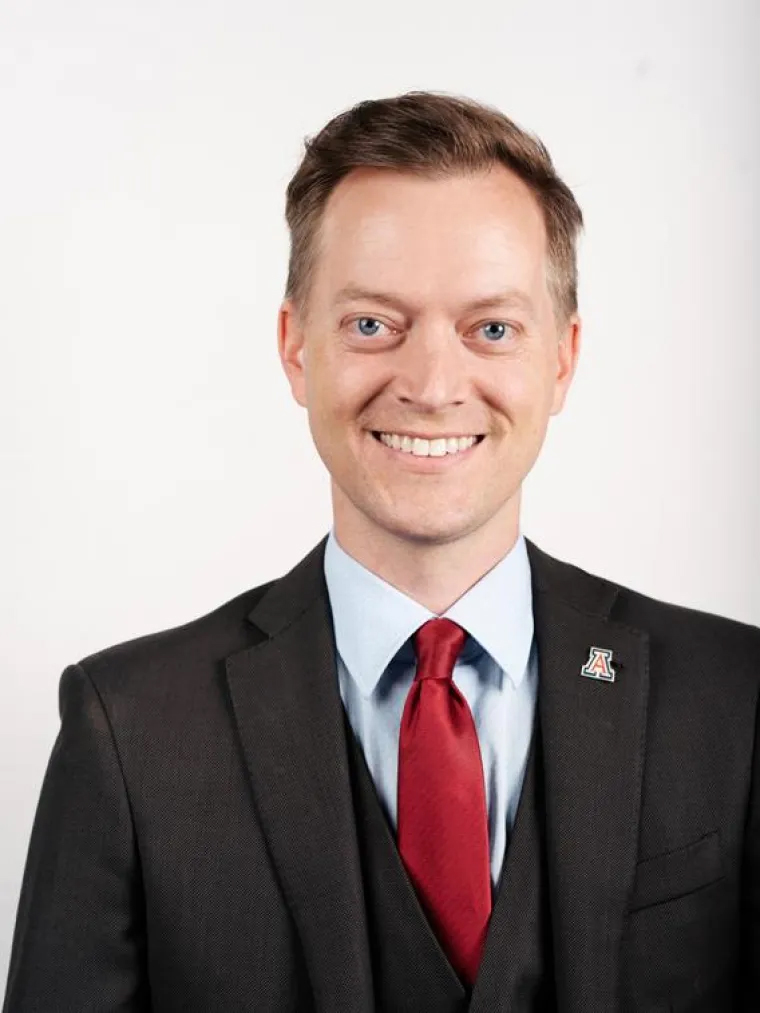
“It wasn’t that I didn’t love music,” he said. “I just wasn’t sure this was the right path for my life.”
The physical and mental demands of pursuing performance full-time, such as long hours of repetitive practice, constant pressure, and the reality of what that career required, made him pause. He began to see that loving music and choosing performance as a profession were two very different things.
Instead of walking away, Thomas decided to stay and finish his degree. He trusted that the skills he was developing would still matter, even if he didn’t know the destination yet. He added minors in math and philosophy, which broadened his perspective while he continued his musical studies.
“For a while, I joked that I majored in a hobby,” Thomas admitted. “But looking back, I couldn’t have been more wrong.”
It wasn’t until years later, while working in a different field, that the value of Thomas’s music education began shining through in his current role. Today, Thomas works in university administration as the Chief of Staff to the University of Arizona’s Chief Financial Officer, who oversees the Division of Business Affairs.
His role is a little tricky to sum up but it involves a mix of communication, project management, problem-solving, and connecting people in a large and complex organization and music plays a role in that work every day.
“Music trains you to think in terms of story,” Thomas explained, “No matter what art form you’re in, you’re always asking: what’s the message, and how will someone experience it?”
Translating Complex Information
That way of considering audience, interpretation, and impact sets him apart in fields that are often very analytical. His skill in translating complex information into something people can understand has become one of his biggest strengths. Experience in ensembles is important too.
“You learn early on that you’re part of something bigger than yourself,” he said. “Even if you’re a soloist, the group only works if everyone is supported.” Those lessons about collaboration, accountability, and listening carry directly into the workplace.
After graduating, Thomas didn’t know what to do next. While his friends and family moved easily from their degrees to careers, he took time to figure things out and cope with the uncertainty.
“There was a lot of existential dread,” Thomas said, laughing. “I came from a family where people knew exactly what they wanted to do. I didn’t.”

Returning to the U of A
Eventually, he went back to school for a master’s degree in public administration, initially thinking he might work with environmental nonprofits. Instead, he returned to the University of Arizona during a tough job market, when it was the only place that called him back. He stayed.
More than 15 years later, Thomas is still at the university, doing work that most people never see but that quietly shapes the daily experience of students, faculty, and staff. “I like knowing that what I do makes people’s lives easier,” he said. “Even if no one ever knows my name.”
Thomas’s current role involves nearly every part of university operations: finance, compliance, communication, issue management, and long-term planning. Much of his work focuses on translating for subject-matter experts and the wider campus community.
“Finance people talk like finance people,” he joked. “My job is to help turn that into something that’s easy for everyone else to digest.”
The work is fast-paced, unpredictable, and constantly changing, much like performing. “It’s like being an accompanist,” Thomas said. “One minute you’re in one style, the next minute you’re somewhere completely different. You adjust and keep going.”
Creativity at Home
Even though music is no longer his profession, it remains an important part of Thomas’s life. He still plays piano for fun and encourages creativity at home, one child continuing piano lessons, another singing with the Tucson Girls Chorus!
He also stays connected to the arts through his involvement in the university’s public art process, serving on the public art committee in a non‑voting role, Thomas helps guide and support installations that shape the campus’s visual and cultural identity!
“I get to advocate for art that makes people pause, ask questions, and feel connected,” he said.
Creativity also shows up in small, joyful ways, from LEGO builds in his office to a mindset that values imagination alongside structure.
“Your dream can change without disappearing.”
Thomas’s advice for current students, especially creatives feeling anxious about their futures, is simple and reassuring: “Your dream can change without disappearing.”
You can love art without turning it into your job, you can pivot without giving up what made you passionate in the first place, and you can carry the skills you gain through the arts into places you never expected.
“A music degree doesn’t limit you,” Thomas said. “It differentiates you.”
For students in the College of Fine Arts, his story is a reminder that there isn’t one correct path. There are many meaningful ones, and sometimes the most impactful work happens offstage.
Thomas McDonald is one of 300+ College of Fine Arts alumni, working at the University of Arizona.
- Alex Atkin | BA ’08, Studio Art
Artist alumna grows into a farmer at Tucson Village Farm - Shiloe Fontes | BA ’07, Visual Communications; MA ’22, Art & Visual Culture Education
Sparking curiosity through creativity at Flandrau Science Center - Thomas McDonald | BA ’06, Music Education; MPA ’11, Organizational Management
Music training shapes leadership skills for future Chief of Staff